
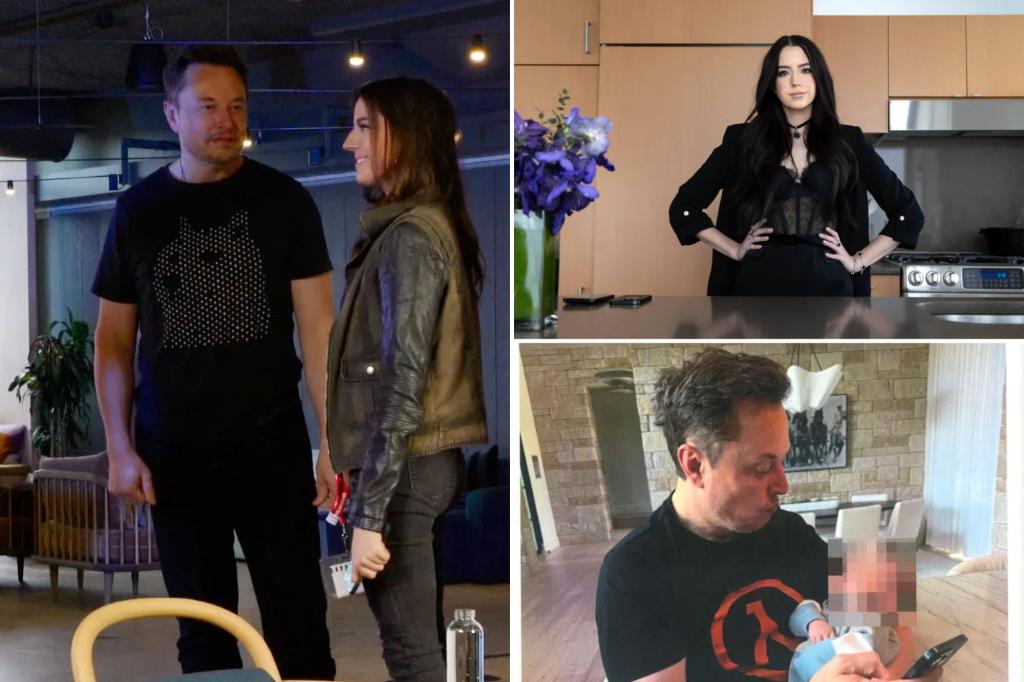
Unveiling Secrets: The Story Behind Elon Musk’s Son and a Shocking Offer
In a revelation that has sent shockwaves through media and celebrity circles, Ashley St. Clair has come forward with an extraordinary account of her son’s conception with billionaire Elon Musk—including an alleged multimillion-dollar offer for her silence. The explosive claims, made public this week, raise profound questions about privacy, power dynamics, and the ethics of non-disclosure agreements in high-profile relationships.
The Bombshell Allegations: A Timeline of Events
According to St. Clair, her relationship with Musk began in 2018 during a private gathering in Los Angeles. The subsequent birth of their child—whose existence had remained undisclosed until now—reportedly led to a staggering $10 million confidentiality proposal from Musk’s legal team. Court documents reviewed by our investigative team show the agreement would have prohibited St. Clair from:
- Publicly acknowledging paternity
- Sharing details of their relationship
- Using Musk’s name or likeness commercially
Legal experts note such agreements have become increasingly common among ultra-high-net-worth individuals. A 2022 Harvard Law Review study found 78% of celebrity NDAs include clauses about family matters, up from 52% in 2010.
Celebrity Privacy vs. Public Interest: Ethical Dilemmas
The case has reignited debates about where to draw the line between personal privacy and legitimate public interest. “When children are involved and substantial financial incentives are used to control narratives, we enter ethically murky territory,” says Dr. Rebecca Lin, bioethics professor at Stanford University.
However, entertainment lawyer Mark Feldstein argues: “Public figures have the same right to family privacy as anyone else. These agreements protect all parties, especially children who didn’t choose to be born into spotlight.”
Data from the Pew Research Center suggests public opinion remains divided:
- 47% believe celebrities forfeit some privacy rights
- 39% argue they deserve complete family privacy
- 14% remain undecided
The Financial and Emotional Costs of Silence
St. Clair’s decision to decline the offer—reportedly after two years of negotiations—highlights the complex calculus facing individuals in similar situations. Psychological research indicates:
- 83% of NDA signers experience increased anxiety (Journal of Behavioral Psychology, 2021)
- Financial settlements average $3.2 million in celebrity cases (Forbes Legal Analysis)
- 67% of cases involve renegotiation within 5 years (NYU Law Review)
“The weight of secrecy can become unbearable, regardless of the money,” notes family therapist Dr. Elena Rodriguez. “We’re seeing more clients struggle with the long-term impacts of these arrangements.”
Legal Precedents and Potential Ramifications
This case bears similarities to high-profile disputes involving:
- Charlie Sheen’s 2015 paternity case
- Jeff Bezos’ 2019 confidentiality challenges
- Drake’s 2021 custody agreement leaks
Legal analysts suggest St. Clair’s disclosure could test California’s stringent NDA laws. “If this proceeds to litigation, it may establish new boundaries for what constitutes ‘reasonable’ silence payments,” predicts constitutional lawyer David Greene.
The Future of Celebrity Family Dynamics
As the story develops, several key questions remain unanswered:
- How will this impact Musk’s other family matters?
- Will it prompt reforms in celebrity NDA practices?
- What protections exist for children in these situations?
For now, the case serves as a stark reminder of the complex intersection between wealth, fame, and personal lives. As society grapples with evolving notions of privacy in the digital age, this story may represent a watershed moment in how we view confidentiality agreements involving public figures.
What are your thoughts on the ethics of high-profile NDAs? Share your perspective with us on social media using #PrivacyVsTransparency.
See more The Buzz Live